
When fall arrives, winter squash starts making its way into kitchens everywhere. Butternut and acorn squash tend to get most of the attention, but delicata squash deserves a spot on your table, too. If you’ve ever wondered how to roast delicata squash, you’ll be happy to know it’s one of the easiest winter squash varieties to prepare.
With its naturally sweet flavor, creamy texture, and beautiful golden color, delicata squash is one of my favorite vegetables to prepare during the cooler months. Best of all, unlike many other winter squash varieties, you don’t need to peel it.
Whether you prefer a simple savory preparation with fresh thyme or a touch of maple sweetness, roasted delicata squash makes a wonderful addition to a fall meal.
What Makes Delicata Squash Different?
Delicata squash is easy to recognize by its elongated shape, pale yellow skin, and distinctive green stripes.
Its thin, edible skin softens during roasting, eliminating the need for peeling. That makes preparation considerably easier than working with a thick-skinned butternut squash.
The flesh has a mild, slightly sweet flavor that becomes richer as it roasts. The edges develop a beautiful golden-brown color, while the inside becomes tender and creamy.
If you’re looking to explore more seasonal ingredients, take a look at my article on Fall Meal Prep Made Easier.
How to Choose and Prepare Delicata Squash
Look for squash that feels firm and heavy for its size, with intact skin and no soft spots.
To prepare it:
- Wash the squash thoroughly since you’ll be eating the skin.
- Trim off both ends.
- Slice the squash lengthwise from stem to tip.
- Scoop out the seeds with a spoon.
- Cut each half crosswise into evenly sized half-moons, approximately ½ inch thick.
Keeping the slices relatively uniform helps them cook evenly.
One of the things I’ve learned from cooking in different kitchens is that ovens don’t always behave the same way. While 400°F works beautifully in most ovens, some run a little cool and benefit from an increase to 425°F.
Rather than relying entirely on the clock, I look for tender squash with edges that are beginning to brown.
How to Roast Delicata Squash with Thyme
This is my standard savory preparation. The thyme complements the squash’s natural sweetness without overpowering it.
Servings: Approximately 4–6 as a side dish
Prep time: 10–15 minutes
Roasting time: Approximately 20–30 minutes
Oven temperature: 400°F
Ingredients
- Approximately 2 pounds delicata squash
- 2 tablespoons olive oil, or enough to coat lightly
- 1 teaspoon thyme leaves, fresh or dried, adjusting to taste
- Salt and freshly ground black pepper, to taste
Optional Maple-Butter Finish
- 2 tablespoons butter
- 1½ tablespoons pure maple syrup
Instructions
- Preheat the oven to 400°F. If your oven tends to run cool, increase the temperature to 425°F.
- Prepare the squash. Wash, trim, and halve the squash lengthwise. Scoop out the seeds and cut into approximately ½-inch-thick half-moons.
- Season. Toss the squash with olive oil, thyme, salt, and pepper until lightly and evenly coated.
- Arrange on a baking sheet. Spread the squash in a single layer, leaving a little room between the pieces. Overcrowding can cause the squash to steam rather than roast.
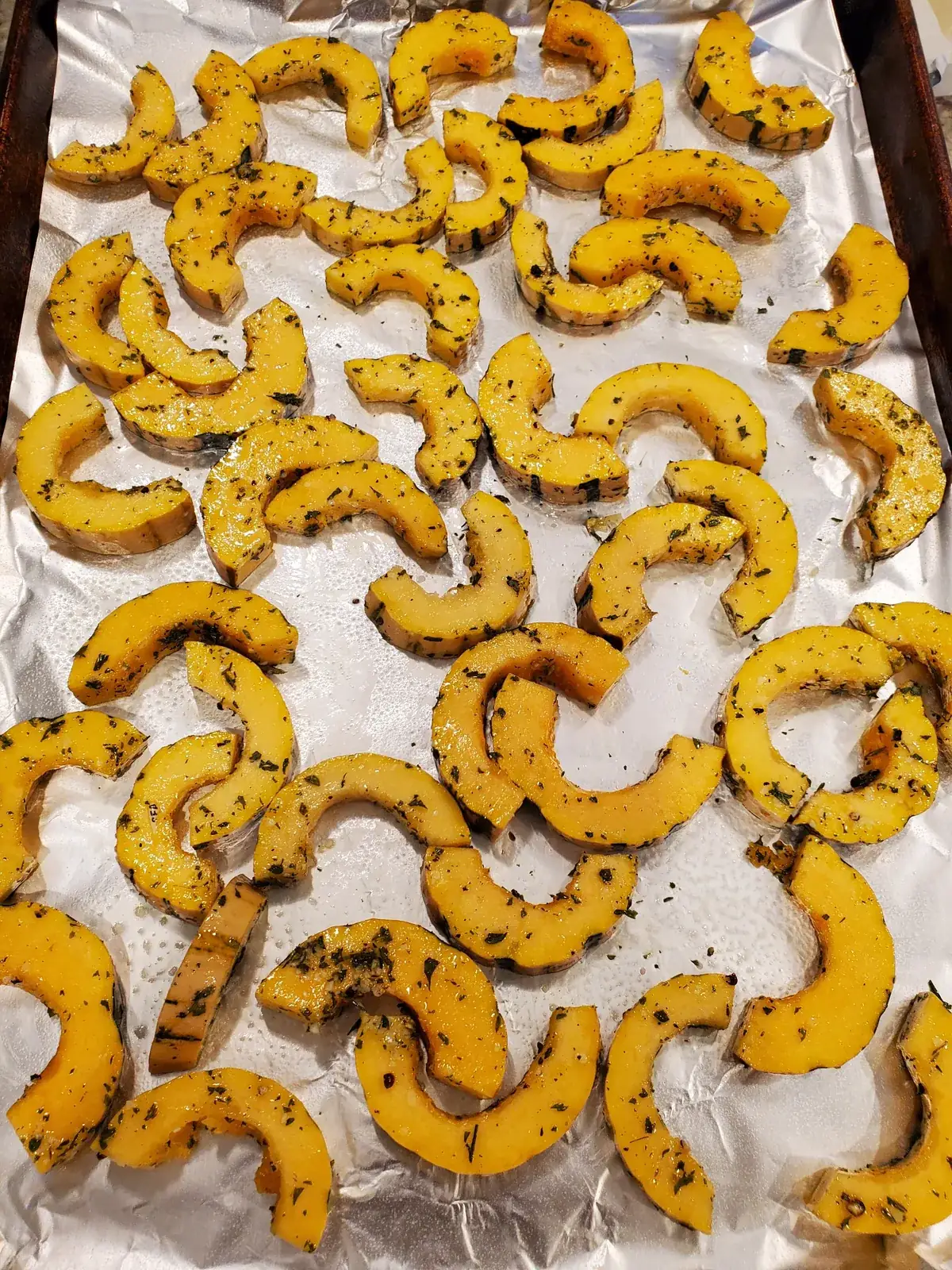
- Roast for approximately 20 minutes. Check the squash for tenderness and browning. Continue roasting as needed, usually another 5–10 minutes, until the squash is soft and the edges begin to brown.
- For the optional maple-butter finish: During the final 5 minutes of roasting, add the melted butter and maple syrup, gently tossing or brushing the squash to coat. Return the baking sheet to the oven to finish roasting.
- Serve warm. The squash should be tender, lightly caramelized, and delicious on its own.
Savory or Sweet? Let the Meal Decide
One of the benefits of delicata squash is how easily it adapts to different flavors.
For a savory dinner, I prefer the simplicity of olive oil, thyme, salt, and pepper. The herbs balance the squash’s natural sweetness and pair beautifully with roasted chicken, pork tenderloin, or other fall dishes.
When I’m preparing meals for families whose children enjoy sweeter vegetables, I’ll sometimes add butter and maple syrup during the last five minutes of roasting.
Adding the maple syrup toward the end allows it to coat the squash without exposing the sugars to the entire roasting time.
Neither version requires much effort, and both allow the natural flavor of the squash to shine.
Tips for Better Roasted Delicata Squash
Don’t peel it. The skin is edible and becomes tender when roasted.
Cut evenly. Consistent slice thickness helps prevent some pieces from overcooking while others remain firm.
Give it room. A crowded baking sheet traps moisture. Use two baking sheets if necessary.
Watch the edges. A little browning adds flavor. You want tender squash with lightly caramelized edges, not pieces that have dried out.
Adjust for your oven. Start checking at 20 minutes, but don’t hesitate to roast longer if the squash needs more time.
For additional information about growing and storing winter squash, the University of Minnesota Extension offers a helpful guide.
Bringing Seasonal Vegetables to the Table
Seasonal vegetables don’t need complicated recipes to taste wonderful. Often, a little olive oil, a few herbs, and the right roasting temperature are all it takes.
Delicata squash is a good example of how a simple ingredient can become a flavorful side dish with just a few adjustments to suit different tastes.
At Stovetop Solutions, I prepare customized meals in clients’ homes throughout Smyrna, Buckhead, Sandy Springs, Vinings, Morningside, East Cobb, and Marietta. Seasonal ingredients like delicata squash are just one way I tailor menus to each household.
If you’d like to learn more about how personalized weekly cooking works, explore my in-home personal chef services.